

Overview
Manage warehouse workflows with barcodes
Use barcodes to identify warehouse locations and bins
Track inventory movements across warehouse operations
Check warehouse data as work progresses
Support Wi-Fi and 4G connectivity
Support 1D barcodes, 2D codes and RFID
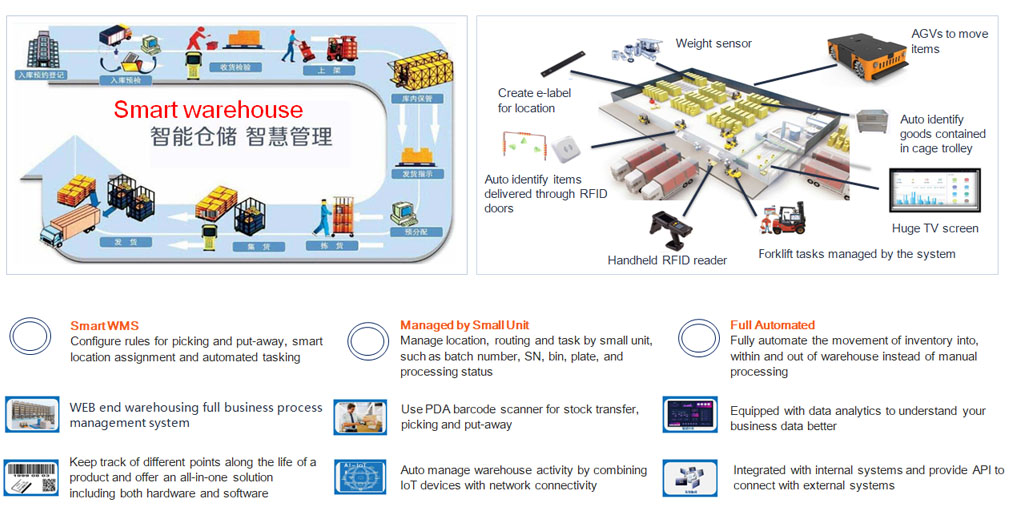
Our WMS Architecture
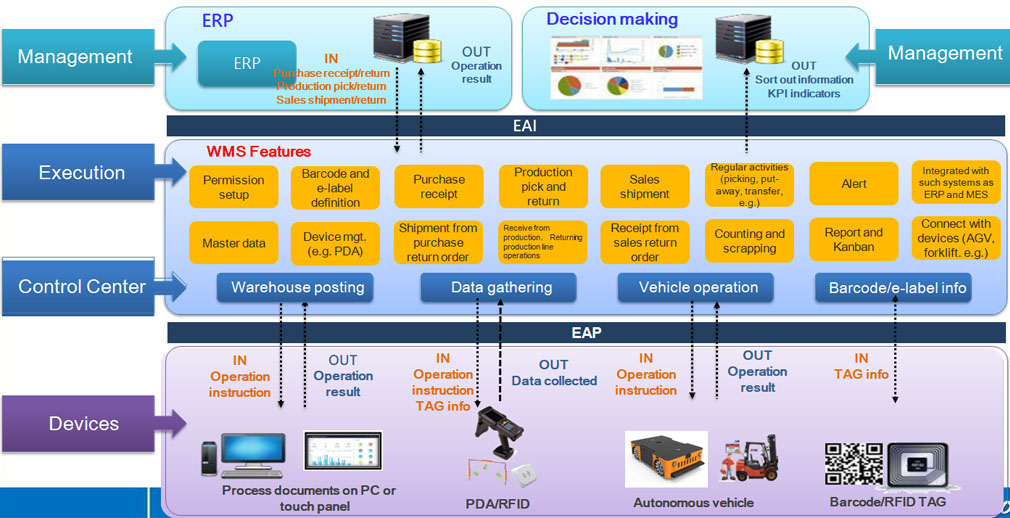
System Features
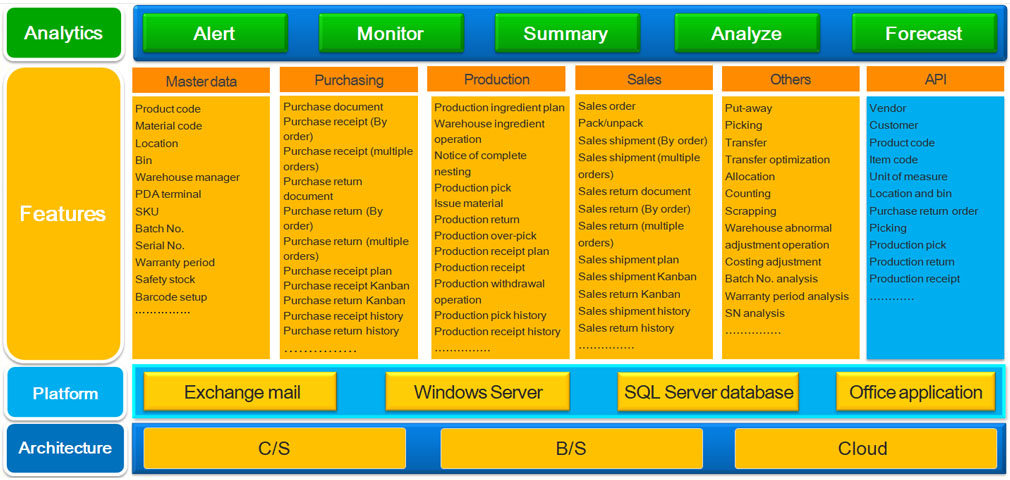
Advantages
Extend warehouse workflows with approval processes.
Integrate with ERP systems, including SAP, Oracle and Microsoft Dynamics 365, and with MES.
Support multilingual warehouse operations.
Support 1D and 2D barcodes and electronic labels, with connections to handheld devices, RFID equipment, AGVs and automated forklifts.
Use a standard product as the foundation, with custom development for business-specific requirements.
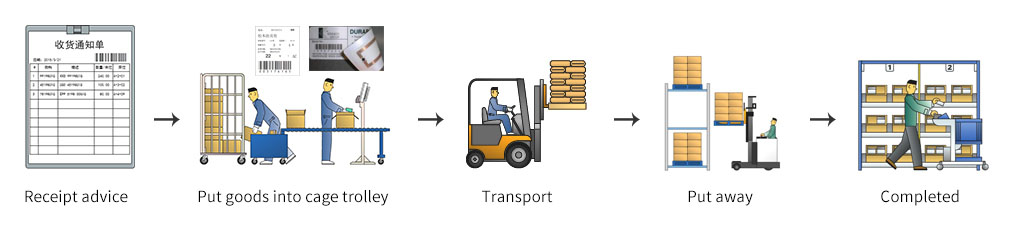
Automated Warehouse: Inbound Logistics
Frequently Asked Questions
What does the WMS solution manage?
It uses barcodes to support warehouse workflows, identify locations and bins, and track inventory movements.
Which identification methods and devices can the warehouse use?
Warehouse identification options include 1D and 2D barcodes, RFID and electronic labels, along with handheld devices, AGVs and automated forklifts. Specific device connections depend on the project requirements.
Discuss Your Requirements
Talk to Weihan about your business processes, integration requirements and project scope.
Contact Us